
Escambia County Wanted-List Limits
Don't expect a browsable county-wide wanted roster from the Escambia County Sheriff's Office. None exists. There's no public ECSO tool for searching all active warrants at once, either. What circulates instead is selective. You'll find Crime Stoppers stories, sheriff's social media posts, and TV segments. Piecing those into a homemade list is a mistake, since an old post can linger online after a case moves on. Someone with a live warrant may never have been featured at all.
The ECSO Warrants Unit is where the official local work sits. The unit maintains warrants the Sheriff's Office receives and coordinates with the Escambia County Clerk and the State Attorney. It tracks down subjects and joins the U.S. Marshals Service North Florida Regional Fugitive Task Force. Its public page describes that mission. What it does not offer is a live results page or a standing photo list.
The official Warrants Unit page shows the local agency context:
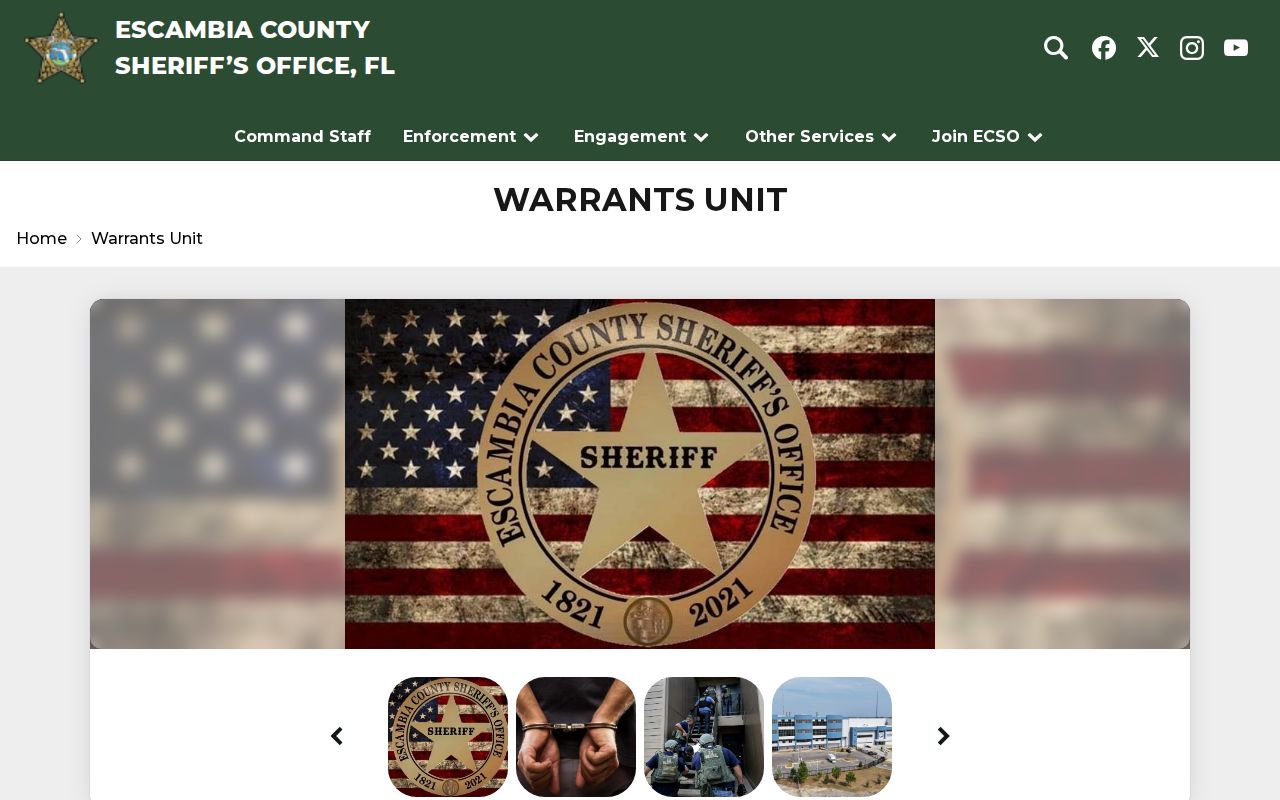
It names the unit that handles warrant work. It won't turn a name search into proof of an active warrant, though.
Search Escambia Wanted-Person Leads
With no ECSO query available, FDLE Wanted Persons is the strongest official starting point. The statewide form takes a last, first, and middle name. Nickname, race, sex, birth date, or age can narrow it further, as long as you meet its minimum rules on surnames or nicknames. A camera icon signals that a photo may be attached. FDLE refreshes the data from the Florida Crime Information Center every 24 hours.
Fresh data still isn't final data. FDLE states plainly that a match does not confirm a warrant is still active. Records can lag behind court or agency action, and a similar name can snag the wrong person. When you get a hit, write down the reporting agency and the case or warrant number. Then let the agency, the court, or an attorney confirm the current status.
The FDLE search interface provides the statewide official lead:
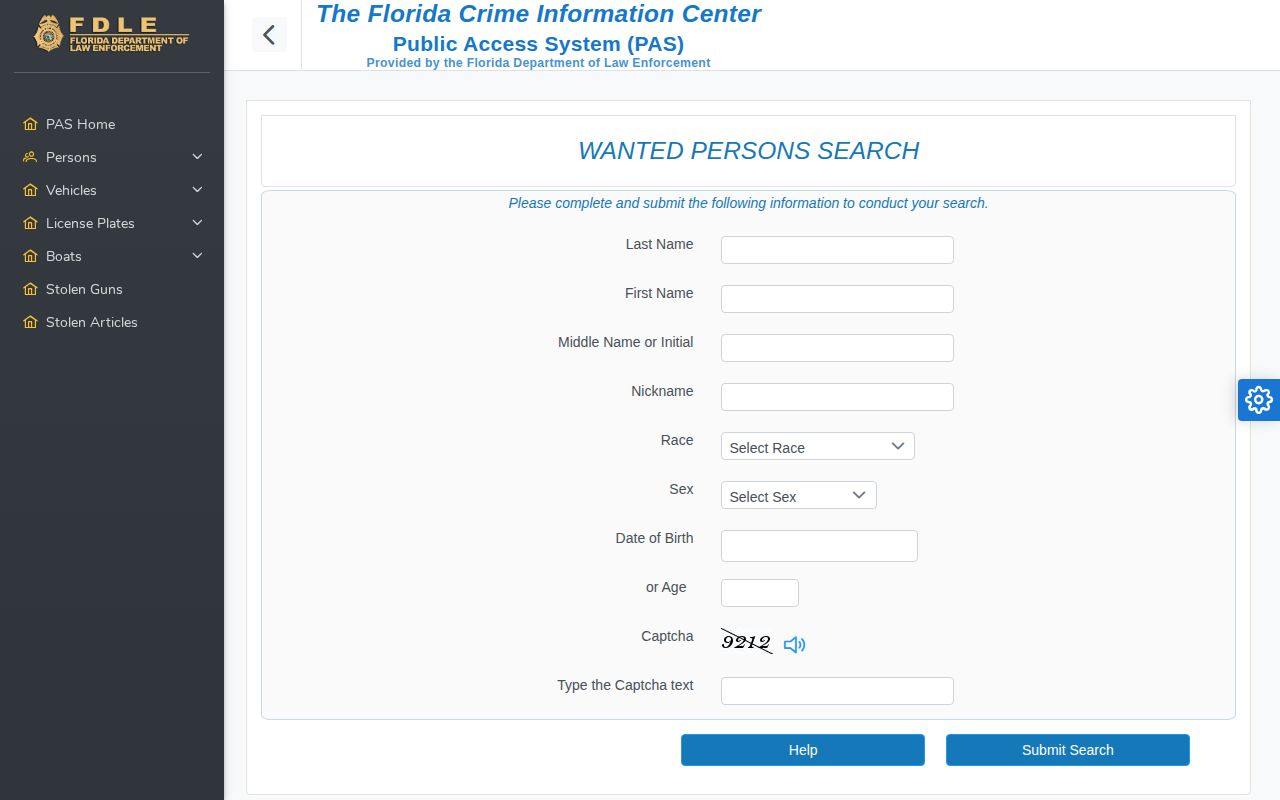
Its fields help you narrow down identity. Its own warning, though, keeps a web result from passing as live warrant confirmation.
| Field | What the FDLE lead may show |
|---|---|
| Name and aliases | Reported identity details used to narrow a candidate match. |
| Image indicator | A camera icon signals that a photograph may accompany the record. |
| Descriptors | Race, sex, birth date, age, or other reported physical details. |
| Reported offense | The alleged basis supplied with the wanted-person entry, not a conviction. |
| Agency and identifiers | The reporting agency plus case or warrant numbers and a reported date. |
| Last known address | A historical lead that must never be visited, republished, or treated as a current location. |
Note: A photograph or descriptor helps compare identities, but neither proves that a warrant remains active or that the person committed an offense.
Confirm an Escambia County Warrant
A solid Escambia County warrant check moves in stages, because each source answers a different question. FDLE offers a statewide candidate lead. The Warrants Unit runs or coordinates the local enforcement side. Escambia Clerk CourtView can surface a related case and its docket events, with one caveat: the Clerk's online data is unofficial, and CourtView is not sold as live warrant confirmation.
Follow this sequence when accuracy matters:
- Search FDLE with enough identity details to reduce a same-name error. Record the agency and case or warrant identifier rather than relying on the photograph alone.
- Review CourtView by name, uniform case number, citation number, or agency number for related docket context. Do not interpret a docket hit as proof that the warrant is active.
- Contact the responsible agency, court, or counsel and ask for current status using the identifier. An attorney can advise an affected person about appearing or arranging a lawful resolution.
- If an arrest and booking later occur, check the official county custody record through the Escambia County booking and roster search. Custody status still does not decide guilt.
A search that returns nothing proves little. The spelling could differ. The data could be protected, or the warrant could sit with another agency entirely. A blank screen is not a clean bill of health. It's also not a reason to go looking for someone. Verification belongs to the government office that holds the record.
| Warrant-related source | What it represents | Confirmation value |
|---|---|---|
| ECSO-administered warrant | A warrant received and handled by the local Warrants Unit. | Seek current status from the responsible agency, court, or counsel. |
| FDLE wanted-person entry | A statewide candidate record drawn from FCIC data. | A lead only; FDLE says it does not confirm an active warrant. |
| Clerk case or docket entry | Judicial case information tied to a name or case identifier. | Useful context, but the online docket is not a live warrant-certification service. |
Friday Escambia Wanted Broadcast
Escambia's most visible wanted feature isn't a roster at all. It's a TV segment. Gulf Coast Crime Stoppers promotes a "Wanted Fugitives" broadcast with ECSO personnel on BLAB TV every Friday at 6:00 p.m., showing photos and case details for selected subjects. Selection makes it good for public awareness and incomplete by design. An older clip, once found, can't tell you whether its featured warrant still stands.
The Friday format also explains a common puzzle: why someone appears in local media yet shows up on no county list. The segment is tied to specific cases, not a searchable index of every Escambia County warrant. Social posts about it can be timely. But they stick around after later court or agency action. The source agency always gets the final word on current status.
The ECSO Crime Stoppers page documents the Friday program and local tip routes:
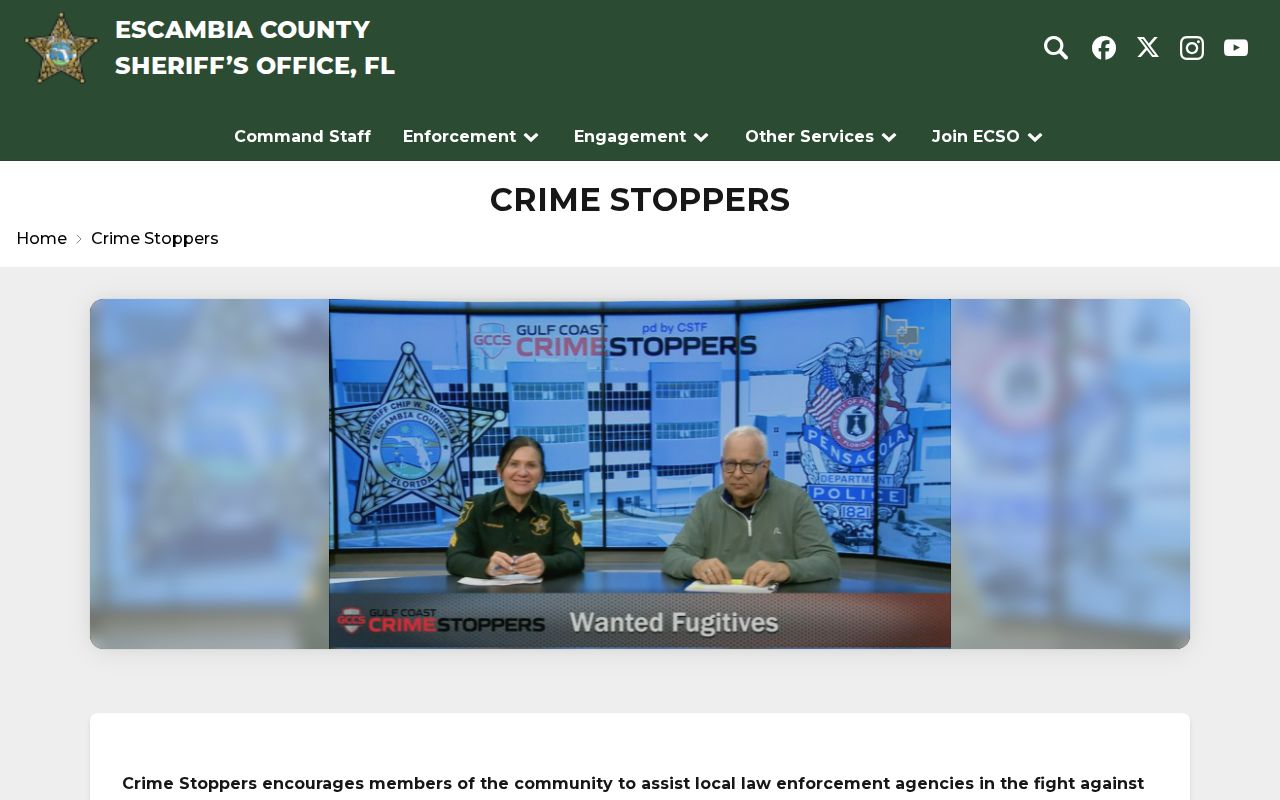
The official page ties the broadcast to a safe, anonymous channel for anyone holding information.
Use Escambia Wanted Notices Safely
Read every Friday segment, FDLE record, or ECSO social notice as a dated lead rather than settled fact. Start by asking who published it and when. Then capture the reporting agency and the record identifier. Don't copy a private address, don't turn a photo into an identification claim, and don't assume the notice covers every wanted person in Escambia County.
- Open the original official notice rather than a cropped repost. Check the date, agency, alleged offense, and any case or warrant number shown.
- Compare name, birth information, and descriptors cautiously. Similar names and old images can cause a harmful mistaken match.
- If the information concerns someone else, send the observed facts to Crime Stoppers or law enforcement. Do not make contact or ask another person to investigate.
- If the information may concern you, contact counsel, the court, or the responsible agency to confirm status and arrange a lawful response.
Someone featured last month may since have been arrested, shown up in County Corrections booking data, or had a court event change the picture. Those later records don't erase the original notice. They do set the limit on what's fair to say today. Check the current source before you share anything.
Escambia Wanted Tips and Rewards
Crime Stoppers on the Gulf Coast takes tips three ways. Call the phone line, fill out the online form, or use the P3Tips app. Phone callers get a tracking number instead of giving a name, and ECSO promises they stay anonymous. Cash rewards exist too. The Escambia County sheriff's office pays when a tip leads to a felony arrest, though not every tip earns money.
Gulf Coast Crime StoppersLocal tip line: 850-433-STOP
Alternate line: 877-433-TIPS
Online and P3Tips routes are linked from the ECSO Crime Stoppers page.
Emergency danger: 911
Keep the tip useful and safe. Tell law enforcement where and when you saw the person, describe any vehicle and its direction of travel, and pass along the FDLE or broadcast identifier if you have it. Never post a private address or warn the subject. Asking friends to confront someone is also a bad move, since a wrong ID can put innocent people in danger.
Note: Keep the assigned Crime Stoppers tracking number if a reward may apply; anonymous callers should not publish their tip details elsewhere.
Resolve Escambia Warrants Safely
Think an Escambia County warrant has your name on it? Don't lean on an FDLE search result alone, and don't use public data to dodge the authorities. Call a lawyer, the court involved, or the agency that issued the warrant. Bring a case or warrant number if you have one, and ask what surrender or appearance process applies. An attorney can also sort out mix-ups when someone shares your name.
Know the difference between the stages, too. A warrant grants legal authority to arrest. An arrest puts a person in custody. Booking creates the jail's intake record, and release ends custody without resolving the charge. What happens next lives in the court record, where charges can be amended, declined, or dismissed.
If the warrant concerns someone else, hand what you know to law enforcement or Crime Stoppers and leave it there. Skip the surveillance and the social media location posts. Trained personnel can verify the lead and respond lawfully.